Master the art of Glass Fencing Sunshine Coast design. This guide helps you choose styles, materials, and layouts for a stunning and compliant fence.
How To Design Glass Fencing Sunshine Coast
Key Takeaways:
- Prioritise safety and compliance with Australian Standards, especially for pool fencing.
- Select a glass fencing style (frameless, semi-frameless, framed) that aligns with your aesthetic and budget.
- Choose hardware finishes that complement your home and can withstand the Sunshine Coast climate.
- Integrate gates seamlessly, ensuring they meet all safety regulations.
- Consider the surrounding landscape and views to maximise the visual impact of your Glass Fencing Sunshine Coast.
Designing Glass Fencing Sunshine Coast is more than just choosing panels and hardware; it’s about seamlessly integrating safety, aesthetics, and functionality into your outdoor living space. The Sunshine Coast’s unique environment, with its abundant natural beauty, ocean views, and outdoor lifestyle, lends itself perfectly to the elegance and transparency of glass fencing. A well-designed glass fence can elevate your property’s value, enhance its visual appeal, and provide an unobstructed connection to your surroundings. However, poor design can lead to an inefficient layout, compromised safety, or a fence that clashes with your home’s architecture. This comprehensive guide will walk you through the critical considerations and creative approaches to design the perfect Glass Fencing Sunshine Coast for your home, ensuring it is both stunning and compliant.
Understanding the Fundamentals of Glass Fencing Sunshine Coast Design
Before you even start sketching, a solid understanding of the core principles of Glass Fencing Sunshine Coast design is essential. This foundational knowledge will inform every subsequent decision, ensuring a successful outcome.
- Prioritising Safety and Compliance: This is non-negotiable, especially for pool fencing. In Australia, strict regulations govern safety barriers around swimming pools to prevent drowning. For your Glass Fencing Sunshine Coast, this means adhering to Australian Standard AS 1926.1 (Safety barriers for swimming pools) and AS/NZS 2208 (Safety glazing materials in buildings). Key compliance points include:
- Minimum fence height (typically 1200mm from finished ground level).
- Maximum gap between panels and the ground (typically 100mm).
- Self-closing and self-latching gates that open outwards, with latches inaccessible to small children.
- No climbable objects within 900mm of the fence.
- Specific requirements for boundary fences acting as pool barriers.
- Always consult with your local Sunshine Coast council for their specific requirements and ensure your design will pass a final inspection. Ignoring these rules can lead to significant fines and the need for costly rework.
- Defining Purpose and Location: What is the primary function of your glass fence?
- Pool Fencing: Safety is paramount, and compliance dictates many design choices.
- Balcony/Deck Railing: Focus on safety from falls, unobstructed views, and aesthetic integration with the building.
- Boundary/Garden Fence: Emphasis might be on aesthetics, view preservation, and creating a sense of openness without sacrificing security. The intended purpose will heavily influence the required strength, height, and type of system.
- Considering the Environment: The Sunshine Coast climate presents specific challenges and opportunities.
- Coastal Exposure: Proximity to the ocean means salt spray, which can accelerate corrosion. This influences material choices for hardware.
- Sun Exposure: UV resistance for materials and potential glare should be considered.
- Views: Maximising views is a primary benefit of glass fencing. Design the fence to frame your landscape or ocean views beautifully.
- Aesthetics and Integration: Your glass fence should complement, not detract from, your home’s architectural style and existing landscaping. Consider:
- Modern vs. Traditional: Glass inherently leans modern, but hardware choices can soften or enhance this.
- Colour Palette: How will the hardware colour interact with your home’s exterior, decking, or paving?
- Flow: How does the fence integrate with existing pathways, doors, and features?
Choosing the Right Style of Glass Fencing Sunshine Coast
The style of glass fencing you choose will be the most significant visual decision, impacting both aesthetics and cost. Each has distinct advantages and disadvantages for your Glass Fencing Sunshine Coast project.
- Frameless Glass Fencing:
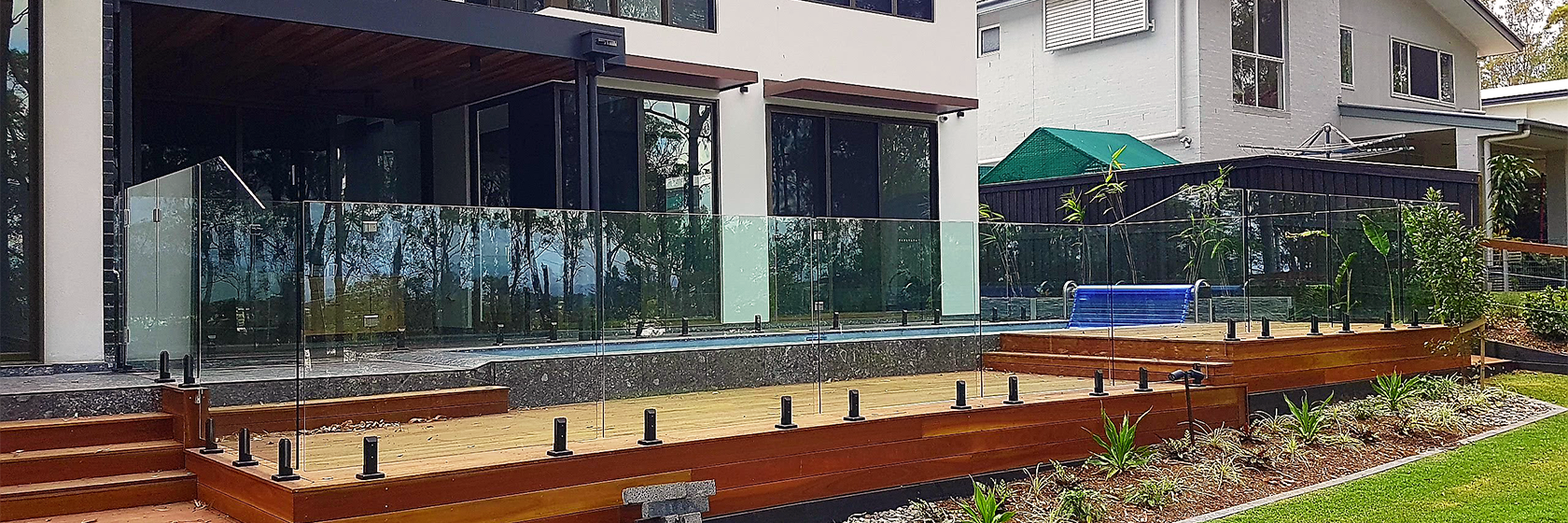
- Aesthetic: The pinnacle of contemporary design, offering truly unobstructed views. The glass panels appear to float with minimal visible hardware.
- Structure: Panels are typically 12mm thick toughened glass, supported by robust stainless steel spigots (clamps) fixed into the ground, a concrete slab, or a timber deck (with appropriate structural support).
- Pros: Maximum transparency, sleekest look, high-end appeal.
- Cons: Most expensive option due to heavier glass, more precise installation requirements, and premium hardware. Can be prone to finger marks if not regularly cleaned.
- Ideal for: Maximising ocean or hinterland views, contemporary homes, luxury pool areas where an uninterrupted visual flow is desired.
- Semi-Frameless Glass Fencing:
- Aesthetic: A popular compromise between frameless elegance and framed practicality. It offers great transparency with minimal visual interruption.
- Structure: Glass panels (often 10mm thick) are supported by slim aluminium or stainless steel posts between each panel.
- Pros: More affordable than frameless, still offers excellent visibility, posts provide a clear boundary, and can be easier to install DIY.
- Cons: Posts create some visual interruption.
- Ideal for: Homeowners seeking a balance of aesthetics and budget, larger areas where full frameless might be cost-prohibitive, or where a slight visual break is acceptable.
- Fully Framed Glass Fencing:
- Aesthetic: Offers a clean look with defined lines provided by a top and bottom rail and vertical posts.
- Structure: Glass panels (often 8-10mm thick) are fully enclosed within a frame of aluminium or stainless steel posts and rails.
- Pros: Most budget-friendly option, highly durable, and excellent for safety. The frame provides additional rigidity.
- Cons: Obstructs views more than frameless or semi-frameless.
- Ideal for: Budget-conscious projects, areas where view isn’t the absolute priority, or a more traditional aesthetic is preferred.
Selecting Materials and Hardware for Glass Fencing Sunshine Coast
The choice of materials and hardware for your Glass Fencing Sunshine Coast is crucial for both its longevity and its visual impact.
- Glass Thickness and Type:
- Toughened Safety Glass (Tempered Glass): This is the only type of glass legally permitted for fencing in Australia. It’s manufactured to be highly resistant to breakage and, if it does break, shatters into small, relatively harmless pieces.
- Thickness: 12mm is standard for frameless, while 10mm or 8mm can be used for semi-frameless and framed systems, respectively. Thicker glass is more expensive but offers greater rigidity and perceived quality.
- Hardware Materials:
- Stainless Steel (316 Marine Grade): This is the premium choice, especially for the Sunshine Coast. 316-grade offers superior corrosion resistance to salt spray and chemicals (like pool chlorine) compared to 304-grade. While more expensive upfront, its longevity makes it a wise investment in a coastal environment.
- Stainless Steel (304 Grade): Suitable for areas further from the immediate coastline or less exposed to harsh conditions. It’s more affordable but will show signs of tea staining (surface rust) over time if not regularly maintained in coastal zones.
- Powder-Coated Aluminium: A popular choice for semi-frameless and framed systems. Aluminium is naturally corrosion-resistant and can be powder-coated in a wide range of colours to match your home’s exterior or landscaping. It’s generally lighter and more cost-effective than stainless steel.
- Hardware Finish and Colour:
- Polished/Satin Stainless Steel: Classic, clean, and modern. Polished offers a mirror-like finish, while satin (brushed) is more muted and shows fingerprints less.
- Black/Charcoal: Increasingly popular for a contemporary, sophisticated look, especially against light-coloured homes or dark-toned decking.
- Custom Colours: Powder-coated aluminium offers endless possibilities to match specific colours from your home’s exterior palette.
- Consider how the hardware colour will interact with your pool tiles, decking, and surrounding landscape. Dark hardware can create a striking contrast, while light hardware can blend in more seamlessly.
Integrating Gates and Maximising Functionality for Glass Fencing Sunshine Coast
The gate is a critical component of any fence, especially for pool safety. Its design and placement require careful consideration for both compliance and convenience.
- Gate Type and Placement:
- Swing Gates: Most common. Ensure they open outwards (away from the pool) and have sufficient clearance.
- Self-Closing Hinges: Mandatory for pool gates in Australia. These ensure the gate automatically closes and latches after being opened. Choose high-quality, adjustable hinges for smooth operation and durability.
- Self-Latching Latches: Also mandatory for pool gates. The latch must automatically engage when the gate closes and be inaccessible to young children (usually a high-mounted release mechanism). Magnetic latches are popular for their reliability.
- Gate Width: Standard gate widths are common, but ensure your chosen width allows for comfortable passage of people and any equipment you might need to move in and out of the fenced area.
- Strategic Placement: Locate gates for convenient access without compromising safety. Avoid placing gates directly opposite house doors if possible, creating a clear pathway to the pool.
- Walkthroughs and Access: Consider the flow of traffic around your property. Do you need multiple access points, or can a single well-placed gate suffice? Minimising the number of gates can save on cost and complexity.
- Addressing Slopes and Uneven Ground: The Sunshine Coast often features undulating terrain.
- Stepped Fencing: The most common solution for slopes. Glass panels are installed at different heights, creating a stepped effect, while maintaining the required gap from the ground at each step. This requires careful planning and precise measurements for each panel.
- Retaining Walls/Leveling: In some cases, building a small retaining wall or creating a level concrete footing may be necessary to provide a stable and compliant base for the fence on a significant slope. This adds to the project’s complexity and cost.
- Lighting Integration: Consider incorporating subtle lighting around your Glass Fencing Sunshine Coast to enhance its beauty and functionality at night. LED strip lighting along the base or small uplights can create a stunning effect and improve visibility for safety.
- Future Maintenance: Design with maintenance in mind. Ensure easy access for cleaning both sides of the glass. Choose hardware known for its durability and ease of maintenance in the Sunshine Coast climate. A well-designed fence is one that not only looks great but also remains beautiful with minimal effort over time.
By meticulously considering these design elements, from initial concept to the final hardware choice, you can create a Glass Fencing Sunshine Coast solution that is not only visually striking but also supremely safe, functional, and perfectly tailored to your property and lifestyle.